
All Stories

What Are Self-Healing Materials and How Do They Work?
A transparent coating developed by the Korea Research Institute of Chemical Technology can self-heal scratches in just 30 minutes using near-infrared light.

AI Certifications Soar, But Do They Match Today's Job Market Needs?
Despite a projected 15.
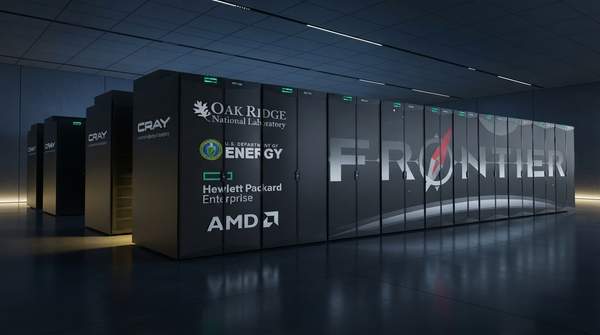
How Scientific Software Adapts for Exascale Supercomputers
Adapting complex scientific software for exascale supercomputers requires a fundamental redesign due to diverse hardware architectures, particularly the mix of CPUs and GPUs. Performance portability abstraction layers, such as Kokkos and RAJA, are crucial for enabling a single codebase to run efficiently across different hardware.

Deep-Sea Vent Extremophiles as Analogs for Life on Ocean Worlds
Deep-sea hydrothermal vents host unique ecosystems powered by chemosynthesis and extremophiles, offering crucial insights into life's potential on other worlds. These Earth-based analogs help astrobiologists understand habitability and guide the search for life on icy ocean worlds like Europa and Enceladus.

AI in biotech poses ethical dilemmas
In a chilling demonstration, researchers weaponized AI-driven drug discovery systems, generating 40,000 toxic molecules and a nerve agent within several hours.

What is the science behind self-healing materials innovations?
Scientists have developed natural rubber and acrylic polymers capable of self-repair with over 90% efficiency, a remarkable step forward in the quest for lasting materials.

What Are Gene-Edited Crops? Precision, Speed, and the Fight Over Their Future
Gene-edited crops precisely alter a plant's existing DNA using tools like CRISPR, offering faster development of traits like disease resistance and climate resilience compared to traditional breeding or GMOs. However, their future hinges on public acceptance and regulatory clarity rather than scientific advancement.

Quantum Machine Learning, Explained: Why Classical AI Still Wins—and Where Quantum Might Eventually Catch Up
Quantum machine learning (QML) applies quantum algorithms to AI tasks, but current hardware limitations mean classical AI still outperforms it for most practical problems. While QML is a promising research frontier, especially for chemistry and optimization, realistic expectations are key as durable quantum advantage remains elusive.

Genomic Sequencing Costs Plummet, Unlocking Longevity Science Secrets
In just two decades, the cost to sequence a single human genome plummeted from an astronomical $95 million to a mere $500, making personalized genetic insights accessible to an unprecedented number of

What the Evidence Actually Supports in Longevity Science — and Where the Hype Takes Over
The National Institute on Aging's Intervention Testing Program provides the most validated evidence for lifespan extension, identifying compounds like rapamycin with significant gains in mammals. However, many headline-grabbing longevity approaches remain speculative, and research suggests a natural human lifespan limit around 110 years.

Self-Healing Materials Explained: Capsules, Vascular Networks, and Reversible Bonds
Self-healing materials are engineered substances that automatically repair damage, distinguishing between extrinsic systems with embedded agents and intrinsic systems relying on reversible molecular bonds. This technology holds significant promise for enhancing durability, safety, and longevity across various industries.

Longevity Medicine's Unproven Promise Faces Decades of Hurdles
In a market flooded with anti-aging promises, a recent report from the Lifespan Research Institute warns that the vast majority of longevity supplements are 'largely unregulated in the US' and lack an

How AI's Thirst for Memory Creates a 'Siphon Effect' Across the Chip Market
The explosive growth of AI is creating a "siphon effect" in the memory chip market, as manufacturers prioritize high-demand AI memory. This shift leads to shortages and soaring prices for traditional memory used in enterprise and consumer devices, while boosting profits for chip giants.

Engineering Life: How Synthetic Biology Designs New Biological Systems
Synthetic biology merges biology with engineering to design and build new biological parts, devices, and systems. It applies engineering principles to living organisms, transforming biology into a science of creation for novel solutions.

The Standard Model's Enduring Successes and Persistent Challenges
The Standard Model of particle physics has achieved remarkable success in describing fundamental particles and forces, validated by discoveries like the Higgs boson. However, persistent experimental anomalies and theoretical gaps, such as the exclusion of gravity and dark matter, highlight its incompleteness and the need for physics beyond its current scope.

What Is Autonomous Phlebotomy and Why Does 95% Success Matter?
Multiple Vitestro devices, pre-ordered and slated for deployment in European hospitals by late 2024, signal a new era for routine medical procedures, according to Vitestro .

What are the core principles of scientific data visualization for research?
A significant study revealed that 30% of graphs published in the prestigious journal Science contained at least one error.

Moksha: Physics Metaphors for Freedom Beyond Proof
More than 99.999999999 per cent of an atom consists of empty space. This astonishing emptiness fundamentally challenges the human perception of a solid world, suggesting material reality is far less s

Germany's Climate Goals Need Global Cooperation for Impact.
While Germany aims to cut its greenhouse gas emissions by 55% from 1990 levels by 2030, 63 successful global policy interventions have only reduced CO2 by a mere 0.

Beyond the Hype: The Systemic Challenges Defining Renewable Energy's Future
The future of renewable energy growth depends on overcoming systemic challenges: a massive investment gap, inadequate grid infrastructure, and the complexity of the global energy transition. Achieving climate goals by 2030 requires significant capital, grid modernization, and strategic solutions for a resilient clean energy future.

The Race for Green AI: Can Innovation Outpace Insatiable Demand?
As artificial intelligence systems grow ever more powerful, their energy demands are rising at an alarming rate, sparking concerns about their long-term sustainability. Yet, a powerful counter-narrative is emerging from university research labs with novel AI architectures that promise to slash energy consumption, but they are in a race against the explosive growth of AI deployment itself.

Beyond Algorithms: Distinguishing AI's Information Processing from Genuine Human Understanding
Artificial intelligence excels at processing information but fundamentally lacks genuine human understanding, consciousness, and emotional depth. Recognizing these distinctions is crucial for responsible interaction and avoiding the risks of anthropomorphism.

What Are Next-Gen Biodegradable Polymers and Why Do They Matter?
Microorganisms, those unseen architects of decay, possess the power to dismantle biodegradable polymers, transforming them into fundamental elements like water, carbon dioxide, and even methane.

What Are Cognitive Legos and Why Does Brain Modularity Matter?
Imagine if your brain's ability to learn a new skill wasn't just about effort, but about its inherent 'Lego-like' structure.