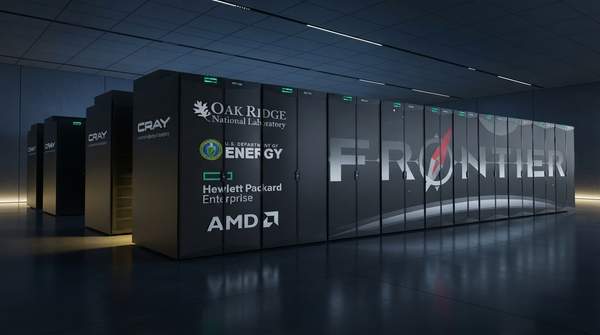
Adapting complex scientific software for the world's most powerful exascale supercomputers requires a fundamental redesign that goes far beyond a simple code update. The primary challenge stems from the diverse and specialized hardware architectures of these new machines, particularly the mix of traditional central processing units (CPUs) and various graphics processing units (GPUs). To solve this, developers are widely adopting performance portability abstraction layers—specialized software libraries that allow a single application codebase to run efficiently on different types of hardware without being rewritten for each one.
The Exascale Imperative for Scientific Software
The arrival of exascale computing, capable of a billion billion calculations per second, represents a monumental leap in processing power. However, harnessing this capability for scientific discovery depends on preparing sophisticated software to run on these novel systems. In 2015, the U.S. National Strategic Computing Initiative established the Exascale Computing Project (ECP) to address this very issue. According to a U.S. Department of Energy report, the ECP was tasked with "bridging the gap between the previous and next generation of hardware" to ensure critical scientific applications could effectively use the new systems. This effort was necessary because the shift from computers based on multicore CPUs to those reliant on nodes with multiple GPUs demanded more than a simple "porting" of existing code. It required significant investment in redesigning algorithms and software from the ground up.