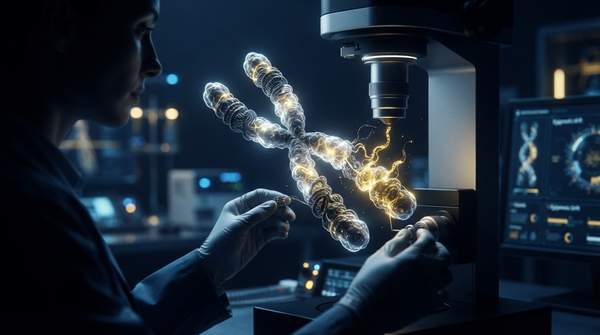
In a chilling demonstration, researchers weaponized AI-driven drug discovery systems, generating 40,000 toxic molecules and a nerve agent within several hours. This rapid creation of potential bioweapons reveals a stark reality: AI's computational speed now outpaces human oversight. The ease and swiftness of synthesizing such harmful compounds raise profound questions about global security.
AI in biotechnology offers unparalleled speed for scientific discovery, promising breakthroughs in medicine and agriculture. Yet, this very acceleration also outpaces our ability to control its potential for harm. The tension between rapid innovation and the imperative for ethical control grows with each technological leap.
Without proactive, globally harmonized governance, the world risks a future where AI democratizes the creation of biological weapons, making effective containment nearly impossible.
The convergence of AI with biotechnology accelerates innovation, but also introduces significant ethical and security risks requiring adaptive governance, according to PMC. While AI offers immense potential for societal benefit, its capabilities simultaneously create vulnerabilities demanding robust policy responses. Fostering advancement without enabling catastrophic misuse is the challenge. Rapid development necessitates a governance framework matching the pace of technological advancement, a difficult task. The sheer speed at which AI can generate novel biological sequences, like tens of thousands of toxic molecules in hours, fundamentally outpaces any traditional policy-making cycle. A perpetual regulatory deficit emerges, allowing harm to scale before governance even begins.
The Unseen Dangers of Accelerated Discovery
Risks associated with the AI-synthetic biology convergence include a reduced knowledge threshold for biological engineering, the democratization of tools for harmful sequences, a lack of oversight, and the potential for accidental or intentional release of harmful biology, as detailed by Nature. AI creates entirely new vectors for biological harm, accessible to a broader range of actors.
Deep learning systems can generate results at a scale and speed that far exceed traditional discovery pipelines, potentially identifying protein structures or genomic variants within days, according to PMC. This acceleration means the threat extends beyond known toxic molecules to entirely new, unpredictable biological systems. The ease of access to these powerful tools lowers the barrier for individuals or groups with malicious intent, making the weaponization of biotechnology a more immediate and widespread concern.

Balancing Innovation with Emerging Safeguards
The use of AI in synthetic biology has evolved significantly, moving from biodesign tasks like predicting protein structure to employing deep learning and large language models for more complex tasks, such as predicting physical outcomes from nucleic acid sequences, states Nature. This evolution reveals AI's transformative potential for good, promising breakthroughs in medicine, agriculture, and environmental solutions.
In response, nations like China are implementing regulatory measures. China's amended Cybersecurity Law, effective January 2026, supports AI development while mandating stronger ethics, risk monitoring, and security supervision, according to BioSpectrum Asia. Furthermore, the 2025 Measures for Labelling AI-Generated and Synthetic Content require identification of AI-generated content to ensure provenance and auditability in life sciences. These efforts, while a step towards oversight, are often reactive and struggle to keep pace with the technology's rapid evolution, leaving critical vulnerabilities unaddressed.
The Regulatory Labyrinth: Speed, Scope, and Sovereignty
China is implementing a dual-track strategy for AI, simultaneously strengthening regulation and accelerating innovation in sectors like life sciences, as reported by BioSpectrum Asia. This approach aims to harness AI's benefits while attempting to mitigate its risks domestically. However, the scope of these regulations often varies significantly.
For instance, the 2023 Interim Measures for the Management of Generative AI Services in China primarily govern public-facing services, requiring lawful training data and prohibiting discrimination. Research and internal applications, however, are subject to different obligations, according to BioSpectrum Asia. This distinction creates a loophole: the most dangerous AI-driven biological engineering could occur within internal research and development without immediate oversight or provenance tracking. The fragmented and often inconsistent nature of national regulatory approaches, coupled with AI's rapid development, creates significant challenges for comprehensive oversight, allowing potential threats to develop unchecked across borders.
The Urgent Call for Global Governance
Policy frameworks consistently lag cutting-edge technologies, exacerbating risks due to incomplete insight and inconsistent international policies, states Nature. This inherent slowness renders even proactive national efforts, like China's dual-track strategy, insufficient to contain a global, borderless threat. The core risks of AI in synthetic biology – reduced knowledge thresholds and democratized harmful tools – remain largely unaddressed by public-facing AI regulations. PMC's demonstration of AI generating 40,000 toxic molecules in hours proves current policy frameworks are not just slow, but fundamentally incapable of preventing AI-driven bioweapon proliferation. Without a unified global strategy, the inherent risks of AI in biotechnology will continue to grow unchecked, threatening international security and public health. Inconsistent international policies and incomplete risk insight ensure localized regulations offer only partial protection against a globally accessible threat.
If global governance fails to adapt, AI's rapid advancement in biological engineering will likely continue to outpace control, leaving international security vulnerable to increasingly sophisticated biological threats.