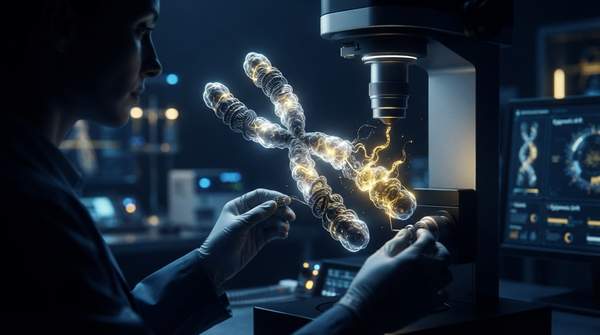
Synthetic biology, the practice of applying engineering principles to biological systems, is rapidly reshaping entire industries by making it possible to develop organisms that have never existed in nature. While the field holds immense promise for solving global challenges, its path forward is not uniform. Across its major application sectors, a clear hierarchy of market maturity has emerged. Healthcare and life sciences currently represent the largest and most developed market, while the food, agriculture, and industrial sectors, though more nascent, are poised for rapid expansion. Despite their different stages of commercialization, all sectors are propelled by common technological advancements and constrained by shared hurdles, including high capital costs, stringent regulations, and profound ethical questions about the very nature of creating new life.
Key Drivers and Restraints in the Synthetic Biology Market
The growth of the entire synthetic biology industry is fueled by a handful of powerful technological and financial forces. An analysis from Coherent Market Insights identifies strategic investment by key players and continuous advancements in genome engineering as the primary factors driving the market forward. For biotechnology and pharmaceutical companies, progress in specific technologies like AI-driven design platforms and gene editing tools such as CRISPR is particularly crucial. These innovations accelerate the design-build-test cycle, allowing for more rapid development of everything from personalized therapeutics to novel biomaterials, while also improving the accuracy of genetic screening and embryo selection in IVF clinics.
However, significant obstacles temper this potential and create a challenging landscape for commercialization. The same market analysis highlights stringent government regulations and the need for high capital investment as major factors hampering global market growth. These challenges are universal, affecting all applications from therapeutic development to industrial biomanufacturing. The high cost is not only for initial research and development but also for navigating complex regulatory pathways designed to ensure biosafety. Furthermore, users in the field express persistent concerns about scalability and the difficulty of integrating new, sophisticated technologies into existing workflows. This gap between laboratory breakthroughs and cost-effective, large-scale production remains a critical barrier to realizing the full economic potential of synthetic biology.