Exascale computing means a machine performing a quintillion—10 to the 18th power, or a billion billion—calculations every second, roughly a thousand times faster than the petascale supercomputers that preceded the milestone. These systems are no longer a promise: the United States Department of Energy has deployed exascale machines at three of its national laboratories, and Europe is following with two systems of its own, in Germany and France, under the European High Performance Computing Joint Undertaking (EuroHPC JU).
What is Exascale Computing?
The Exascale Computing Project, a now-concluded US effort whose site is retained for historical reference, framed the milestone plainly: the fastest supercomputers of its era solved problems at the petascale, "a quadrillion (10^(15)) calculations each second," and exascale represented the next level of achievement. At "1,000,000,000,000,000,000 operations per second," the project wrote, exascale machines could quickly analyze massive volumes of data and more realistically simulate complex processes behind many of the fundamental forces of the universe.
The Department of Energy's own explainer adds useful context on how the measurement works. Computer performance is commonly measured in floating point operations per second, or FLOPS—simple arithmetic like addition and multiplication. A person solving addition problems with pen and paper works at roughly 1 FLOP, one problem per second, which puts the gap between human arithmetic and a quintillion operations per second into perspective.
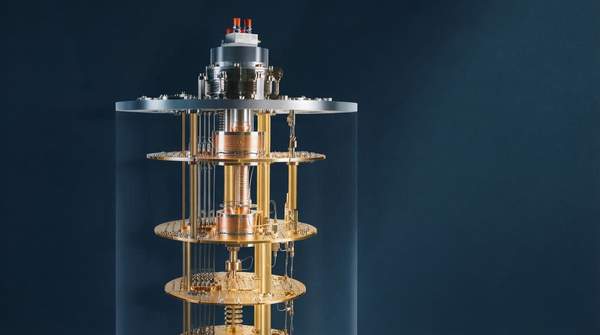
Exascale machines are not a fundamentally new kind of computer. The Department of Energy describes them as digital computers broadly similar to today's systems but with far more powerful hardware, distinguishing them from quantum computers, which represent a completely new approach suited to specific types of questions. EuroHPC JU likewise emphasizes that supercomputers earn the "super" label by performing calculations simultaneously in parallel, giving each server a small part of the problem to solve.
Transforming Scientific Discovery: Key Application Areas
The Department of Energy lists the research questions it expects exascale power to serve: more realistic Earth system and climate models, understanding the nanoscience behind new materials, building future fusion power plants, new studies of the universe from particle physics to star formation, and support for national security tasks such as maintaining the US nuclear deterrent.
The Exascale Computing Project's catalogue overlaps and extends that list, naming precision medicine, regional climate, additive manufacturing, the conversion of plants to biofuels, the relationship between energy and water use, the unseen physics in materials discovery and design, and the fundamental forces of the universe. Its stated ambition was that exascale computing would drive discoveries across the spectrum of scientific fields and improve both our understanding of the world and how we live in it.
European officials describe a complementary set of priorities. EuroHPC JU says exascale computing will facilitate more accurate and detailed simulations, enhance data-driven discoveries, and support real-time decision-making across scientific research, industrial innovation, and societal advancement. Forschungszentrum Jülich, host of Europe's first exascale system, says its machine will help solve fundamental and urgent questions surrounding climate change, pandemic management, and sustainable energy production, while enabling intensive use of artificial intelligence and analysis of large data volumes.
GENCI, the French national high-performance computing agency leading the Jules Verne consortium, is more specific still. Its director of innovation and technology, Stéphane Requena, told EuroHPC JU he hoped to see the French system supporting breakthroughs in new battery design, the search for cures to cancer, Parkinson's and Alzheimer's disease, and European large-scale AI foundation models.
Leading Exascale Supercomputers: A Comparative Overview
The table below consolidates the major publicly announced US and European systems named across official announcements from the Department of Energy, EuroHPC JU, Forschungszentrum Jülich, and GENCI. It is not an exhaustive global list, and it deliberately omits hardware specifications and benchmark comparisons, which the underlying announcements do not consistently provide.
| Supercomputer | Host institution / location | Primary stated mission / application area |
|---|---|---|
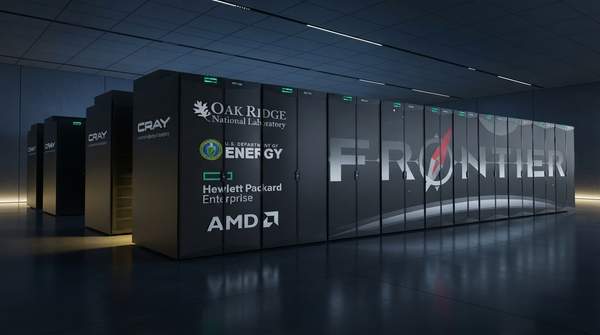
| Frontier | Oak Ridge National Laboratory, USA | General exascale science applications; no unique primary mission stated in the sources |
| Aurora | Argonne National Laboratory, USA | General exascale science applications; no unique primary mission stated in the sources |
| El Capitan | Lawrence Livermore National Laboratory, USA | National security; described as the world's most powerful supercomputer dedicated to that mission |
| JUPITER | Forschungszentrum Jülich, Germany | First exascale system in Europe; climate change, pandemic management, sustainable energy, AI and large-scale data analysis |
| Jules Verne | GENCI / CEA, TGCC computing centre, Bruyères-le-Châtel, France | Second EuroHPC exascale system; open to scientific, societal and industrial uses including battery design, disease research, and European AI foundation models |
Two qualifications matter when reading this table. The Department of Energy names Frontier, Aurora, and El Capitan as its exascale systems but does not assign distinct primary missions to Frontier and Aurora in the material cited here; the general exascale uses listed above—climate, materials, medicine—apply to them as a class. And the European deployments carry their own timeline: EuroHPC JU announced in 2023 that Europe would deploy its two exascale systems in Germany and France in 2024 and 2025, using European technologies and serving European research and innovation.
The Future of Discovery: Leveraging Exascale Power
Readers should recognize that exascale supercomputers are critical infrastructure for addressing humanity's most complex scientific and societal challenges, requiring continued investment and international collaboration. The US and Europe are pursuing the same milestone with distinct emphases—America's trio spans open science and dedicated national security work, while Europe's two systems are explicitly tied to European research priorities and open access for scientists, industry, and the public sector across the continent.
The measurable indicator to watch is the announcement of new exascale systems, the expansion of existing systems' capabilities, or new scientific breakthroughs directly attributed to exascale computing. The completion of JUPITER's installation at Jülich and the Jules Verne system's operation at the CEA's TGCC computing centre are the concrete near-term milestones that will show whether Europe's stated 2024–2025 deployment timeline holds.
Sources
- DOE Explains...Exascale Computing — Energy.gov
- Exascale is coming to Europe, but what does that mean? — The European High Performance Computing Joint Undertaking (EuroHPC JU)
- Understanding Exascale - Exascale Computing Project
- Exascale Computing — FZ Juelich
- The Jules Verne Consortium Will Host the New EuroHPC Exascale Supercomputer in France — The European High Performance Computing Joint Undertaking (EuroHPC JU)
- GENCI