In 2026, the critical temperature of a superconductor increased by 5.4%—not through material addition, but by embedding it in a 'dark cavity' that amplified the quantum jitters of empty space, as reported by EurekAlert!. A groundbreaking demonstration challenges the traditional view of empty space as a void, revealing that its quantum fluctuations, observable in distant stars, can be manipulated to enhance materials on Earth. Our understanding of the universe's fundamental fabric is thus expanding, potentially leading to new technologies and a deeper grasp of extreme cosmic phenomena.
Cosmic Echoes: Probing the Vacuum in Deep Space
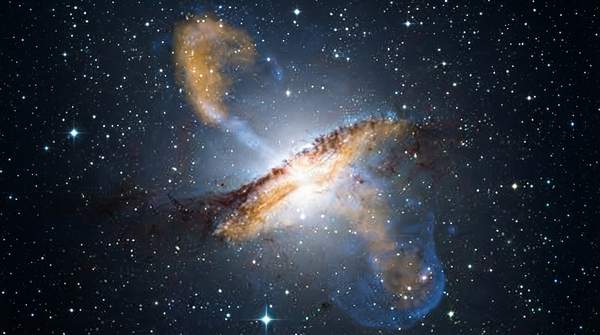
Observations of magnetar 1E 1547.0-5408, a rare neutron star with immense magnetic fields, revealed extremely high X-ray polarization aligned with its magnetic field, considered compelling evidence of vacuum birefringence, according to ScienceDaily. The cosmic phenomenon, if fully confirmed, offers a unique laboratory to test fundamental quantum physics under conditions unattainable on Earth, verifying the existence of quantum fluctuations on a universal scale.
Harnessing the Void: A Lab Breakthrough
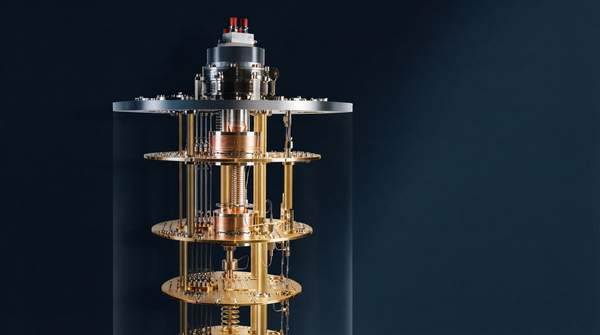
In a controlled laboratory setting, a team introduced a terahertz split-ring resonator to amplify vacuum fluctuations, enabling direct interaction with the quantum vacuum, EurekAlert! reports. The setup allowed the superconducting state to exchange virtual photons with the dark cavity, lowering its energy and strengthening superconductivity. The experiment unequivocally demonstrates a direct, controllable method to leverage quantum vacuum effects for practical material enhancement, opening a novel pathway for material design.
Empty Space: A New Design Parameter?
EurekAlert!'s demonstration that a material's critical temperature can be increased by 5.4% through vacuum fluctuation amplification establishes 'empty space' as a new design parameter in materials science. The paradigm shift could accelerate breakthroughs like room-temperature superconductivity beyond traditional chemical synthesis. Future advanced materials may thus be defined not solely by atomic structure, but by their quantum interaction with the surrounding vacuum. While ScienceDaily cautiously presents vacuum birefringence in magnetars as 'signs' requiring confirmation, EurekAlert! reports the enhancement of superconductivity via vacuum fluctuations as a demonstrated result. The distinction highlights that while cosmic observations confirm the phenomenon's natural existence, terrestrial experiments are already actively manipulating and applying it. The universe's fundamental 'void' is proving to be an active, engineerable medium, compelling a re-evaluation of basic physics and opening doors to technologies once considered speculative.