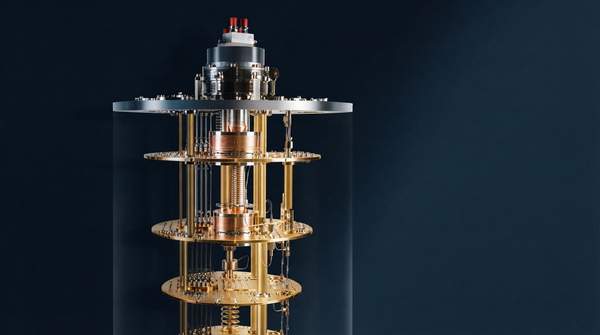
No single quantum hardware approach currently wins on every metric that matters. Superconducting qubits deliver speed and manufacturing scale, trapped ions deliver fidelity and coherence, photonic systems suit networking, and topological qubits promise built-in error resistance but remain unrealized. That structural trade-off—speed versus fidelity versus scalability—is the defining feature of the race to build a fault-tolerant quantum computer, and understanding it is the key to evaluating every hardware announcement that follows.
The Race for Quantum Computing: Diverse Hardware Approaches
A qubit is only useful if its physical carrier can be initialized, controlled, measured, and kept coherent long enough to compute. The four leading modalities choose radically different carriers: superconducting circuits chilled to cryogenic temperatures, individual ions suspended in electromagnetic fields, photons routed through optical circuits, and, most speculatively, quasiparticles whose quantum information would be protected by topology itself.
Arun Govindankutty's scholarly review of qubit modalities frames the field's structure plainly: different technologies trade off speed, coherence, connectivity, and manufacturability in ways that favor different parts of the quantum stack. The review also notes a shift in community attention away from maximizing raw physical qubit counts and toward improving the end-to-end utility of quantum processors—a signal that engineering quality, not headline numbers, is now the battleground.