
All Stories

Gut Bacteria Enhance Cancer Therapy by Reprogramming T Cells
In a groundbreaking discovery, the presence of Segmented filamentous bacteria (SFB), a common gut bacterium, dictates whether anti-PD-1 immunotherapy successfully shrinks melanoma tumors.

Michigan House Republicans Vote to Repeal Clean Energy Standards
By a narrow 58-47 margin, Michigan House Republicans voted to erase the state's clean energy standards, a decision poised to reshape Michigan's environmental trajectory.

Brain-Controlled Hearing System Human Studies Show Voice Isolation Success
In a quiet lab, four epilepsy patients with electrodes already implanted in their brains became the first humans to directly control a hearing system with their thoughts.
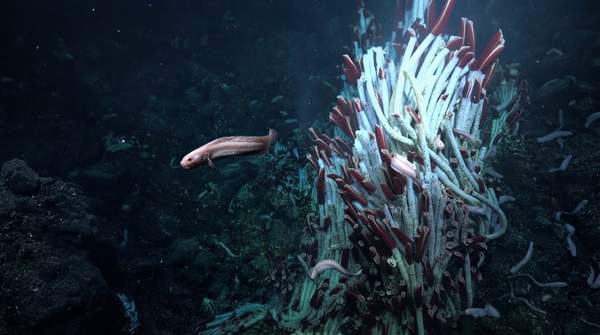
Exploring Earth's Hidden Frontiers: Subglacial Lakes and Hydrothermal Vents
Explore Earth's hidden frontiers: subglacial lakes beneath Antarctic ice and deep-sea hydrothermal vents. Discover how these extreme environments push the limits of life and technology, offering clues to astrobiology and planetary history.
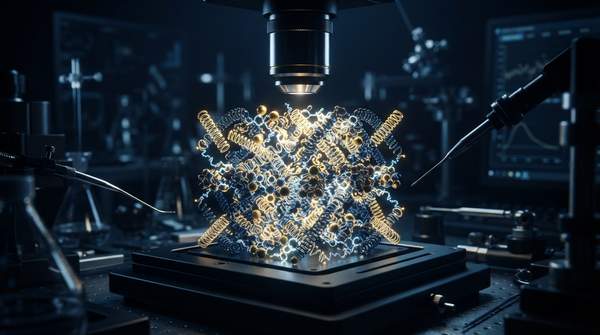
How Nanomaterials Build Themselves: Principles and Applications
Nanomaterials can spontaneously organize themselves from disordered building blocks into complex, functional structures through a bottom-up process called self-assembly. This strategy, driven by molecular interactions, is crucial for designing advanced materials with tunable properties for applications in medicine and energy.
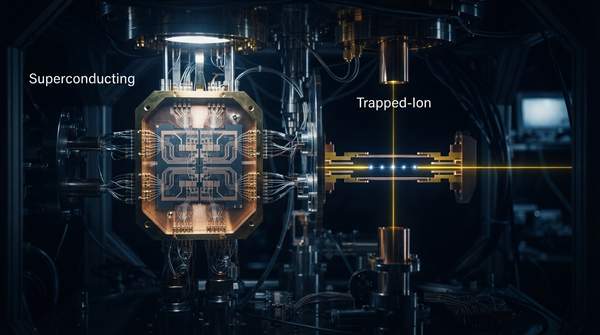
Superconducting vs. Trapped-Ion Qubits: A Guide to the Trade-Offs
This guide compares superconducting and trapped-ion qubits, two leading quantum computing architectures, detailing their distinct trade-offs in fidelity, speed, scalability, and connectivity. The optimal choice depends on specific application requirements.
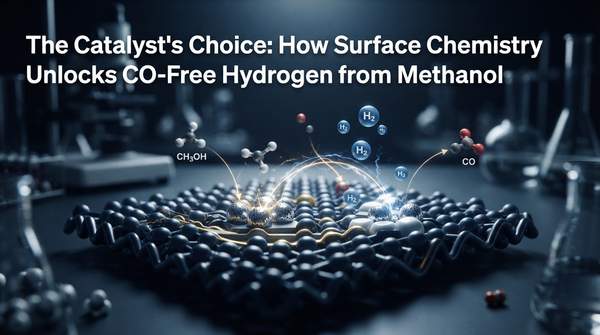
The Catalyst's Choice: How Surface Chemistry Unlocks CO-Free Hydrogen from Methanol
Methanol offers a safe way to store and transport hydrogen, but producing it cleanly requires advanced catalyst design to avoid poisonous carbon monoxide byproducts. By manipulating surface chemistry through palladium alloys or hydroxyl-rich supports, researchers can steer reactions towards pure hydrogen and carbon dioxide.
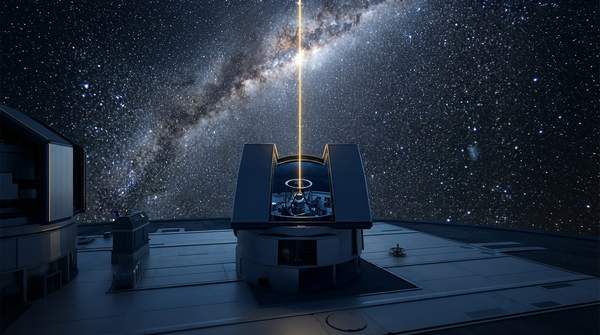
Dark Matter vs. Dark Energy: The Cosmic Forces Shaping Our Universe
Dark matter and dark energy constitute over 95% of the universe, acting as opposing cosmic forces. Dark matter provides gravitational scaffolding for structures, while dark energy drives accelerated expansion.

De-extinction is an ethical debate, not just a scientific one: here is the framework
De-extinction, the attempt to bring back vanished species, presents a fundamental ethical choice: should we reverse extinctions caused by humans or focus resources on saving existing species? Understanding the ethical frameworks and trade-offs is crucial for navigating this complex debate.

Naturwissenschaften retracts two Max Planck papers from 1940s
The journal Naturwissenschaften has completely removed two papers by physicist Max Planck from the 1940s, leaving only blank pages and a note citing 'article violation,' according to Ars Technica .

Positive Grassmannian Reveals New Mathematical Discoveries
Pieces of the positive Grassmannian, a complex mathematical object, reveal shared structures in systems as diverse as traffic flow, shallow-water waves, and quantum particle scattering, as reported by

Giant asteroid passes safely; undetected threats remain
A giant asteroid, 1997 NC1, will pass safely within seven lunar distances of Earth on June 27. This event, while benign, highlights that our ability to detect all potential threats before they pass remains imperfect.

Extreme Heatwaves and OpenAI Restrictions Escalate in 2026
As the UK recorded its highest ever June temperature at 36.

IBM chip technology extends Moore's Law with 0.7nm breakthrough
IBM has unveiled a new chip design capable of cramming 100 billion transistors onto a silicon chip the size of a fingernail.

Europe heat wave strains power grid, driving up prices
France experienced its first major power outage during a record-breaking heat wave affecting Europe, plunging thousands into darkness as temperatures soared.

Study suggests Neanderthal extinction not caused by inbreeding
Genetic analysis of 27 Neanderthal genomes from Belgium reveals high diversity, directly contradicting the long-held belief that inbreeding led to their extinction.

Study on Morning Cancer Therapy Effectiveness Retracted Due to Flaws
A paper in Nature Medicine , which suggested non-small cell lung cancer patients could benefit from morning immunotherapy, has been formally retracted following a four-month investigation, according t

MIT expands calculus concepts and applications access for college success
In the fall of 2025, MIT launched the MIT4America Calculus Project.

NSF cuts hundreds of research programs
On May 2, the National Science Foundation (NSF) terminated over 330 active grants, part of a broader reduction in budgets for hundreds of basic science programs.

Automorphism defines local operators in quantum gravity
In the esoteric realm of quantum gravity, where defining fundamental particles has long been a conceptual quagmire, a new mathematical 'automorphism' now offers a surprising bridge between local and n

Phobos moon: Rapid approach, characteristics reveal origin
Mars' moon Phobos is hurtling towards its demise, nearing the Red Planet at a rate of six feet (1.

Blue Origin rebuilds launch pad as Relativity targets Mars
An uncrewed Blue Origin New Glenn rocket exploded during an engine-firing test on May 28, forcing a rebuild of its Florida launch pad, according to WMBD Radio.

Ebola vaccine sits on shelf 15 years due to systemic failures
A 2011 vaccine candidate demonstrated 100% protection in macaques against the Bundibugyo Ebola strain, yet it has never been deployed in humans, leaving communities vulnerable to ongoing outbreaks.

Startup Subquadratic Unveils 12M-Token LLM, Shattering Context Limits
A Miami-based startup, Subquadratic, has launched an AI model with a 12-million-token context window.