Deep beneath Antarctic ice and in the crushing darkness of the ocean floor lie two of Earth's most extreme and scientifically compelling environments: subglacial lakes and hydrothermal vents. Exploring these hidden realms is driven by fundamental questions about the limits of life, the history of our planet, and the potential for life elsewhere in the solar system. The pursuit of these answers requires overcoming immense technological hurdles, from drilling through kilometers of ice without contamination to operating robots under pressures that can pulverize steel.
The Deep Frontier: Why Extreme Environments Matter
The motivation to explore Earth's most inaccessible locations stems from a desire to understand fundamental planetary processes and the nature of life itself. Scientists probe subglacial systems to answer questions about the stability of ice sheets and how geothermal heat influences ice flow. The sediments in these isolated basins hold a potential record of the continent's climate history, preserved for millennia. Similarly, deep-sea exploration of hydrothermal vents aims to discover new marine species and understand ecosystems that are completely independent of solar energy. These environments, powered by chemical reactions, offer a glimpse into how life might develop and persist under conditions vastly different from our own.
Subglacial Lakes: Icy Worlds and Astrobiological Analogues
Antarctic subglacial lakes are vast bodies of water that have been isolated from the atmosphere for thousands or even millions of years. The scientific interest in these environments is twofold. First, they are unique terrestrial ecosystems, home to extremophilic microorganisms known as psychrophiles that have adapted to survive in constant cold and low-nutrient conditions. These organisms rely on chemical interactions between water, ice, and underlying sediments, creating ecosystems built on energy sources other than the sun.
Second, and perhaps more compellingly, these lakes serve as crucial analogues for icy moons in our solar system. According to NASA, Jupiter's moon Europa and Saturn's moon Enceladus are primary targets in the search for extraterrestrial life, and both are believed to harbor vast liquid water oceans beneath thick ice shells. As NASA's astrobiology program notes, figuring out how to access and sample Earth's subglacial lakes is a vital step, as "the technology and techniques used to do this could be stepping stones to the types of instruments we need to get below the icy surfaces of ocean worlds."
Hydrothermal Vents: Oases of Chemosynthetic Life
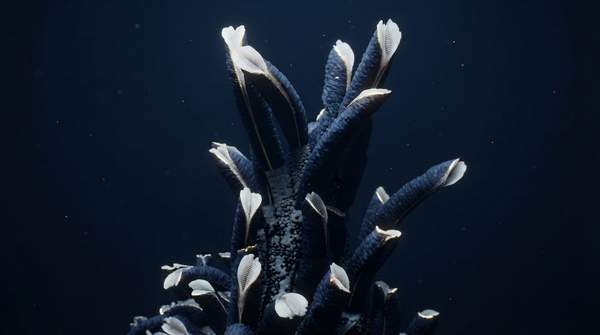
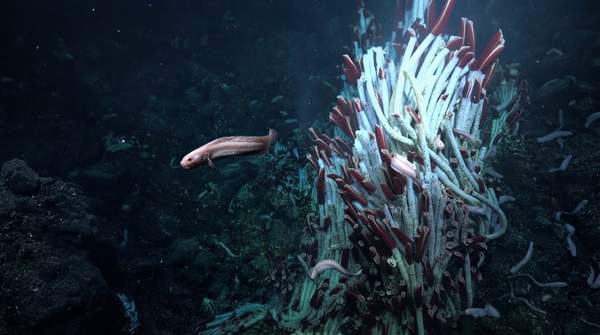
In the deep ocean, hydrothermal vents are fissures in the seafloor that release geothermally heated water. These sites support entire ecosystems teeming with life, all in the absence of sunlight. Instead of photosynthesis, life here is based on chemosynthesis, where microbes convert chemicals like hydrogen sulfide from the vents into energy. This process forms the base of a unique food web that can include giant tube worms, clams, and shrimp found nowhere else on Earth. Exploring these vents allows scientists to study the biodiversity of deep-sea ecosystems and understand the origins and evolution of life in extreme settings. These areas are also vulnerable to potential exploitation, making their study and characterization a priority for conservation.
Overcoming the Extremes: Technological Challenges and Solutions
Accessing these environments requires pushing the boundaries of engineering. According to NOAA, deep-ocean exploration must contend with a host of challenges, including intense pressures, extreme cold, total darkness, and corrosive saltwater. To overcome these obstacles, engineers have developed advanced submersible technology and remotely operated vehicles (ROVs) with specialized capabilities to visualize, sample, and survey the deep sea. These robotic explorers are humanity's eyes, hands, and sensors in a realm humans cannot easily visit.
For subglacial lakes, the primary technological challenge is clean access. Drilling through several kilometers of ice without contaminating the pristine environment below is a monumental task. Projects like the Whillans Ice Stream Subglacial Access Research Drilling (WISSARD) have pioneered clean-drilling techniques to ensure that any life detected is native to the lake, not introduced from the surface. Future exploration will require further technological advances, including down-borehole monitoring systems, instruments for long-term measurement, and methods for sampling deep benthic sediments to unlock the secrets held within.
Comparative Overview: Subglacial Lakes vs. Hydrothermal Vents
| Dimension | Subglacial Lakes | Hydrothermal Vents |
|---|---|---|
| Primary Scientific Objective | To understand ice sheet dynamics, study Earth's climate history, and investigate the environments as astrobiological analogs for icy moons like Europa and Enceladus. | To discover new marine species, understand chemosynthetic ecosystems independent of sunlight, and study life in extreme deep-sea environments. |
| Key Environmental Challenges | Maintaining absolute cleanliness during access, drilling through kilometers of thick ice, and operating in isolated, high-pressure, and extremely cold conditions. | Withstanding intense, crushing pressures, extreme cold (away from vents), total darkness, and the corrosive effects of saltwater. |
| Example Mission/Technology | Clean-access hot-water drilling techniques and robotic submarines designed for sterile sampling and exploration. | Advanced remotely operated vehicles (ROVs) and submersible technologies designed to visualize, sample, and survey in high-pressure deep-sea environments. |
Future Directions in Extreme Environment Exploration
Continued investment in specialized technologies and interdisciplinary research is essential to advance our understanding of subglacial lakes and hydrothermal vents. The scientific questions posed by these hidden worlds demand novel engineering solutions, from more sophisticated autonomous robots to cleaner and more efficient drilling systems. Progress in this field will be measured by tangible outcomes. The development and deployment of new robotic vehicles and clean-access drilling systems, along with the discovery of novel extremophile species, will indicate progress in our quest to explore the most remote and challenging environments on our own planet and, eventually, beyond.