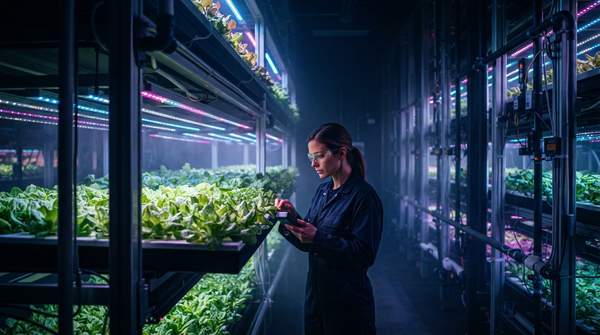
Vertical farming replaces the horizontal field with stacked growing layers indoors, and that single architectural change forces a chain of technological substitutions: soil gives way to nutrient solutions, sunlight to engineered light, and weather to managed climate. The result, according to researchers at the USDA's Agricultural Research Service, is a system that can grow regional or seasonal crops year-round, anywhere a controlled environment can be established. Understanding how the three core systems work—soilless cultivation, artificial lighting, and environmental control—explains where the documented resource savings in water and land actually come from.
The Core Pillars of Vertical Farming
A vertical farm is best understood not as a single technology but as three interlocking subsystems. The first is the cultivation system, which grows plants without soil using methods such as hydroponics, aeroponics, or aquaponics. The second is the lighting system, typically built on LEDs that supply the light plants would otherwise draw from the sun. The third is the environmental control system, which manages temperature, humidity, carbon dioxide, and other growing conditions inside a warehouse or similar structure.
Each pillar removes a constraint of traditional agriculture. Soilless methods remove dependence on arable ground; artificial light removes dependence on the season and the sun's schedule; environmental control removes exposure to weather, drought, and pests. A review of vertical farming innovations describes this integration as enabling year-round crop production with significantly reduced water, land, and pesticide use compared with conventional field growing.