A gene drive is a self-propagating genetic element that biases its own inheritance so it spreads through a population far faster than ordinary genes would. Normally, any given allele has a 50 percent chance of being passed to offspring. A CRISPR-based gene drive breaks that rule by physically copying itself onto the matching chromosome in a carrier's germline, converting what would have been a heterozygous state into a homozygous one. The result is that nearly all offspring inherit the drive, and a trait—such as sterility or resistance to a parasite—can sweep through an entire species in a few dozen generations.
Introduction to Gene Drives and Super-Mendelian Inheritance
Under Mendelian inheritance, a heterozygous parent passes each of its two allele versions to roughly half its offspring. Gene drives subvert this by ensuring the drive allele is transmitted to almost every descendant. As Synthego's explainer on CRISPR gene drives puts it, these are "self-propagating genetic elements that bias their inheritance so they can spread through populations more rapidly," and engineered versions can push deleterious traits such as sterility through a pest or disease-vector population.
The enabling technology is CRISPR-Cas9, the RNA-guided genome editing tool that researchers at the Wyss Institute helped develop and have since embedded into synthetic gene drives. The Wyss Institute notes that such drives "in principle can swipe across large populations," potentially shifting gender ratios or other biological traits over many generations. That capacity for rapid, self-sustaining spread is what makes gene drives simultaneously attractive and contentious.
The Molecular Mechanism of CRISPR-Cas9 Homing Gene Drives
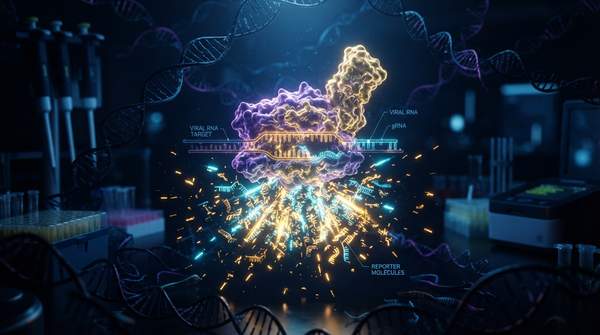
The most widely used mechanism is called homing. A homing drive cassette contains three components: the gene encoding the Cas9 enzyme, a guide RNA (gRNA) gene, and the cargo gene carrying the desired trait. The cassette is inserted into a chosen target gene on one chromosome of an organism that is otherwise wild-type at that locus.
When that organism's germline cells prepare to make gametes, the gRNA directs Cas9 to the identical sequence on the homologous wild-type chromosome and cuts it, creating a double-strand break. The cell's own repair machinery then steps in. Because the drive cassette sits on the sister chromosome and carries matching homology arms, the homology-directed repair pathway uses it as the template to patch the break—copying the entire drive cassette into the cut site. The heterozygous germline cell becomes homozygous for the drive, and essentially every gamete it produces carries the construct.
Homology-directed repair is the same cellular pathway researchers exploit for precise gene editing generally: as one review of CRISPR-Cas9-mediated HDR describes, exogenous donor templates carrying a desired sequence enable precise insertions, deletions, and substitutions at a chosen genomic site. The gene drive simply makes that template permanent and self-replicating.
How a CRISPR-Cas9 Homing Gene Drive Biases Inheritance
The full sequence of molecular events, traced from parent to offspring, shows where the 50 percent rule is broken:
- Parent 1 (wild-type): carries two normal copies of the target gene.
- Parent 2 (drive carrier): carries at least one copy of the gene drive cassette inserted into the target gene.
- Offspring (initial heterozygous state): inherits one wild-type allele from Parent 1 and one drive allele from Parent 2. Under Mendelian rules, this offspring would pass the drive to only half of its offspring.
- Gene drive action in the germline: the gRNA inside the drive directs Cas9 to cut the wild-type allele at the matching site on the homologous chromosome.
- Homology-directed repair: the cell repairs the double-strand break using the drive cassette as its template, copying Cas9, the gRNA, and the cargo gene into the wild-type chromosome.
- Final gametes produced: nearly every gamete now carries the drive allele, because the germline cell has been converted from heterozygous to homozygous.
- Inheritance probability: transmission rises from the Mendelian 50 percent toward nearly 100 percent, compounding with every generation.
The key insight is that the drive does not merely favor its own transmission—it actively rewrites the competing allele. That is why the effect compounds: each converted individual becomes a new source of conversion in the next generation.
Distinguishing Homing Drives from Meiotic Drives
Homing is not the only way to bias inheritance. A meiotic drive works during gamete formation by destroying or disabling gametes that carry the competing allele, rather than copying itself onto the homologous chromosome. A well-studied example in malaria mosquitoes is the M-locus in Anopheles gambiae males: as researchers describing a CRISPR endonuclease gene drive in the mosquito explain, male offspring of an M/m male always carry the paternal M allele, analogous to an XY chromosome system, with the drive acting on gamete ratios rather than by direct gene conversion.
The distinction has practical consequences, as the same study emphasizes. Meiotic drive destroys gametes, which "may negatively affect mating competitiveness by lowering the number of viable gametes," though in some cases gametes are produced in sufficient excess that this does not matter—in the nup50 meiotic drive reported by Li et al., male fecundity did not differ from wild-type. Homing, by contrast, "functions through conversion and should not affect gamete numbers," and on a per-cut basis it is moderately more efficient than meiotic drive. For these reasons, the leading experimental systems for malaria control, including those targeting Anopheles gambiae, are built on the homing mechanism.
Applications in Disease Control and Conservation
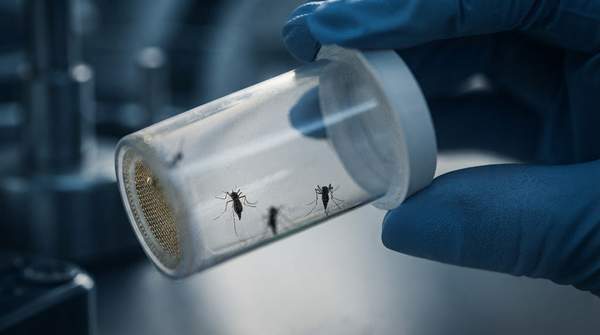
The proposed applications cluster around two goals. The first is disease-vector control: gene drives could alter insect populations that spread diseases such as malaria, schistosomiasis, dengue, and Lyme, according to the Wyss Institute. A review of gene drives for malaria control argues that self-propagating drives have characteristics that warrant development for controlling insect pest and vector populations—they are theoretically easy to deploy and self-sustaining, and their species-specific design offers the potential to reduce environmental risks while complementing existing control strategies, potentially expediting malaria elimination.
The second goal is conservation and agriculture. The Wyss Institute identifies protecting at-risk ecosystems from destructive invasive species and improving agricultural sustainability by reducing pesticide and herbicide use as further targets. Researchers there have also engineered gene drives to investigate pathogenic fungi and uncover new drug-resistance mechanisms. In each case, the appeal is the same: a trait introduced once can spread through a wild population on its own.
Ecological Risks and Safeguarding Strategies
That same self-propagation is the core risk. A drive released into one population could in principle spread beyond the intended geographic range or into related species, and its ecological consequences—effects on food webs, predator–prey relationships, or ecosystem functions—are difficult to predict in advance. The malaria-focused review notes that following proof-of-principle experiments, the scientific community called for clarity on how gene drive research should be regulated, prompting the National Academy of Sciences to publish guidelines for safe and ethical research that pairs self-governance with government oversight.
Several molecular safeguards are under development. The Wyss team has worked on methods to minimize unwanted genome editing at other places in the genome, and on secondary gene drives capable of overwriting the changes introduced by earlier drives—a built-in reversal mechanism. Modeling the outcomes of drive release in nature is a third pillar of their safety work. The malaria review adds that eventual deployment decisions will require case-by-case evaluation balancing ethical and ecological implications against potential benefits, "in agreement with the communities and the countries that are affected by the disease."
Ethical Considerations and Responsible Implementation
The ethical questions are inseparable from the technical ones. Because a released drive may cross borders and cannot easily be recalled, affected communities—not just the researchers or funders—have a legitimate stake in whether it is deployed. The National Academy of Sciences framework cited in the malaria literature deliberately avoids a blanket verdict, instead recommending that each gene drive product be judged on its own efficacy, safety, and ethical profile, so that prudent decisions do not prematurely stifle research or, conversely, rush a release.
Navigating the Future of Gene Drive Technology
Given the transformative potential and inherent risks, the development and deployment of gene drive technology require continued rigorous scientific evaluation, the implementation of robust safeguarding strategies, and extensive public engagement. The mechanism itself is now well understood: a homing drive converts heterozygotes to homozygotes in the germline, and that conversion—not luck—is what pushes inheritance from 50 percent toward 100 percent. What remains genuinely open is how societies will govern it. The measurable indicators to watch are ongoing research publications detailing new molecular confinement or reversal drive mechanisms, and regulatory frameworks or international agreements addressing gene drive release protocols.
Sources
- CRISPR Gene Drives: Eradicating Malaria, Controlling Pests, and More — Synthego
- Gene Drives — Wyss Institute
- CRISPR-Cas9-mediated homology-directed repair for precise gene editing - PMC
- A CRISPR endonuclease gene drive reveals distinct mechanisms of inheritance bias - PMC
- Gene drives to fight malaria: current state and future directions - PMC